
Course overview
The Maintenance Engineering Pressure Vessel (MEPV) course is a structure training program focused on the mechanical behaviours, failure modes to consider, and assessment of pressure vessels in service. This training class is designed specifically for maintenance engineers and mechanical integrity personnel, focusing on their unique needs rather than those of pressure vessel designers. While understanding the principles of pressure vessel design is essential for asset management, this course approaches the subject through the practical lens of maintenance and operational activities, ensuring greater relevance and applicability to the participants' roles.
Rather than starting with the typical paragraph-by-paragraph Code-based training approach, this course begins by providing a foundation for understanding failure modes which is critical for connecting the rules and procedures outlined in design/FFS Codes with real-world evaluations. Design and Fitness-For-Service (FFS) analysis can often seem abstract, but this course bridges the gap by highlighting the connections between technical rules and how components may fail under various conditions. This course is intended to start with understanding of how equipment actually behaves under load, how and why failures occur, and links Code methods to the underlying theory. CANATUS believes this approach is more effective for building understanding while not focusing on each line of the Code book explicitly. The course will “get into the math” on many occasions and uses this approach to link Code rules back to first principals.
Example problems are included throughout to help reinforce concepts and highlight potential special cases.
Participants will develop a working understanding of key topics including basic failure modes, stress analysis, ASME design rules (both Section VIII, Division 1 and Division 2), and Fitness-for-Service concepts. While the class focuses on pressure vessels, participants will also be able to apply learnings to other structures and pressure assets.
Who this course is for
- Maintenance and reliability engineers
- Pressure equipment and mechanical integrity engineers
- API inspectors and inspection personnel
- Engineers transitioning into pressure equipment or fitness-for-service work
What you will learn
- Understand pressure vessel behaviours under loads
- Identify key failure modes and how they effect evaluation of in-service equipment
- Understand the basis for many ASME Design rules and the structure of the ASME Section VIII books
- Interpret stress behavior, loading conditions, and common design limitations
- Better understand the intent behind ASME Section VIII Division 1 and Division 2 rules
- Apply practical Fitness-For-Service (FFS) concepts to damaged or aging equipment
- Make more informed inspection, maintenance, repair, and operating decisions
Course Topics
- Codes, Standards, and Engineering Fundamentals: Understand the regulatory framework governing pressure equipment, including ASME, API, NBIC, and related industry standards. Learn how stress develops in pressure vessels, how shell theory applies to real equipment, and why Codes use specific design margins and stress limits.
- Pressure Equipment Failure Modes: Explore the major failure mechanisms that influence pressure vessel design, operation, and maintenance, including plastic collapse, local failure, buckling, fatigue, ratcheting, creep, fracture, and serviceability concerns. The course emphasizes the physical behavior behind the rules, not just the equations.
- ASME Section VIII Divisions 1 and 2: Gain practical insight into the design philosophy, organization, and application of ASME Section VIII Divisions 1 and 2, including openings and reinforcement, flanges, external pressure, combined loading, tall towers, horizontal vessels, and the use of Division 2 methods to better understand and optimize Division 1 equipment.
- Fitness-For-Service (FFS) and Remaining Life Assessment: Learn the engineering approach behind API 579-1/ASME FFS-1 evaluations, including general metal loss(GML), local thin area (LTA) assessments, remaining life calculations, inspection data requirements, and repair-versus-replace decision making for equipment already in service.
Course delivery
This course is best delivered in-person to allow the participants to ask engaging questions and bring up real world examples oftheir own; however, virtual and custom delivery options are also possible. The entire course is typically a minimum of 24 hours (3 days) of material with options for increased focus in areas of interest.
Instructors

Ryan Jones, P.Eng., MBA is a Principal Engineer and founder of Canatus Engineering Group. A proven leader with over 28 yearsof experience in the Oil/Gas/Chemical industry in the areas of risk management,equipment lifecycle, analytical assessments, failure analysis, and assetintegrity management. Ryan also brings awealth of experience leading high performing teams in a technical environmentto deliver both technical expertise and insight through various services andproducts. Combining that with Ryan’spassion for process planning, strategy, operations, and business development,he looks forward to helping clients solve a broad range of problems.
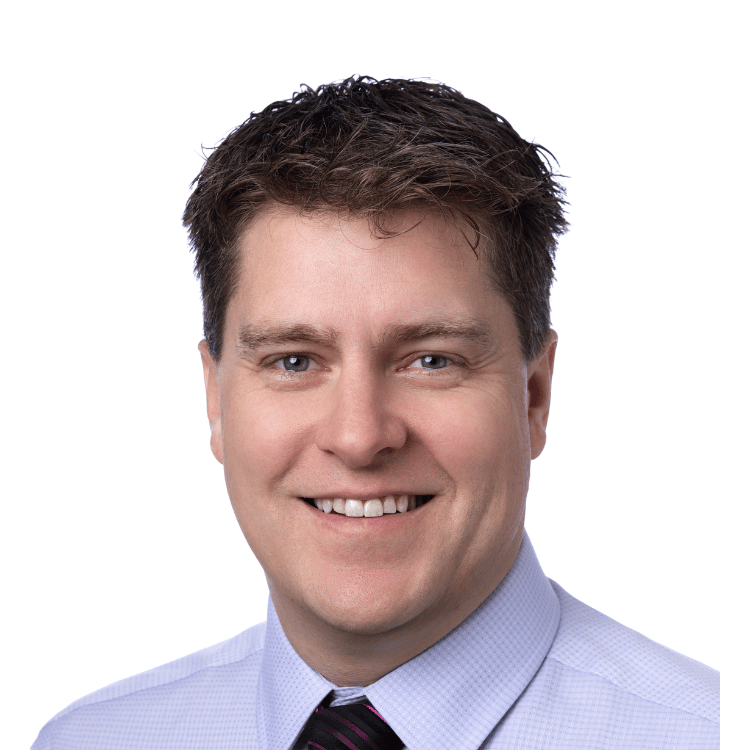
Derek Rinas, a Principal Engineer at Canatus Engineering Group, brings over two decades of invaluable expertise across diverse sectors including Oil and Gas, Chemical Processing, Pulp and Paper, and Power industries. With a rich background as both a consultant and maintenance engineer, Derek is renowned for his adeptness in delivering pragmatic solutions to clients' challenges. His proficiency spans fitness-for-service and finite element analysis, crafting innovative repair strategies, and offering indispensable turnaround support. Derek's commitment to excellence and his knack for translating complex technical insights into actionable plans make him an indispensable asset in the realm of engineering consultancy.