
Fatigue Life Assessment of High-Cycle Adsorber Vessels
Problem
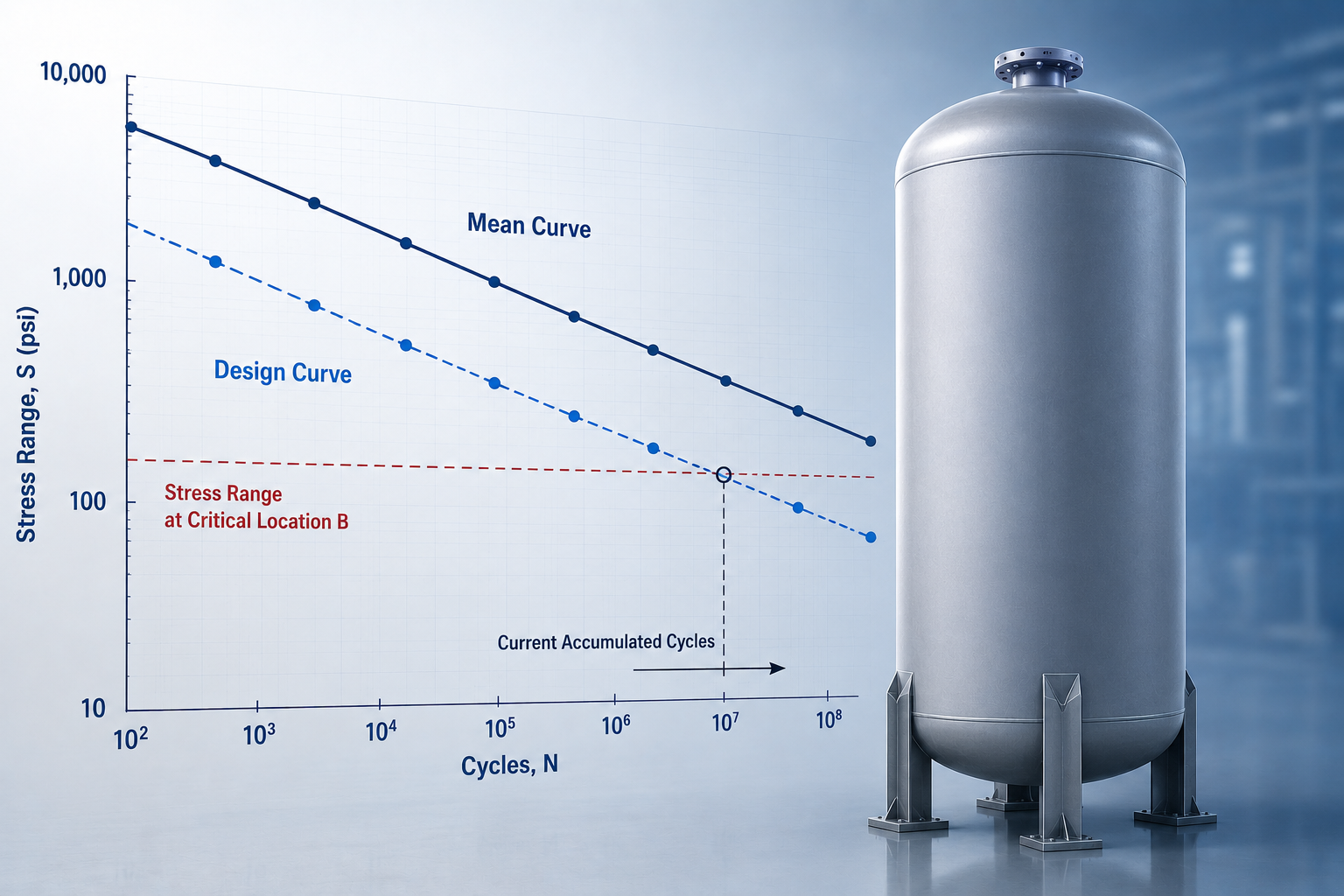
A pair of cyclic-service vessels at a facility had exceeded their original design fatigue life after more than 6 million pressure cycles. The vessels operated on rapid pressure swings with approximately two-minute cycle times, creating concern for fatigue-sensitive weld details, nozzle connections, and long-seam weld peaking. The facility required a practical basis for continued operation, inspection prioritization, and long-term integrity management without unnecessary replacement or outage scope.
Solution
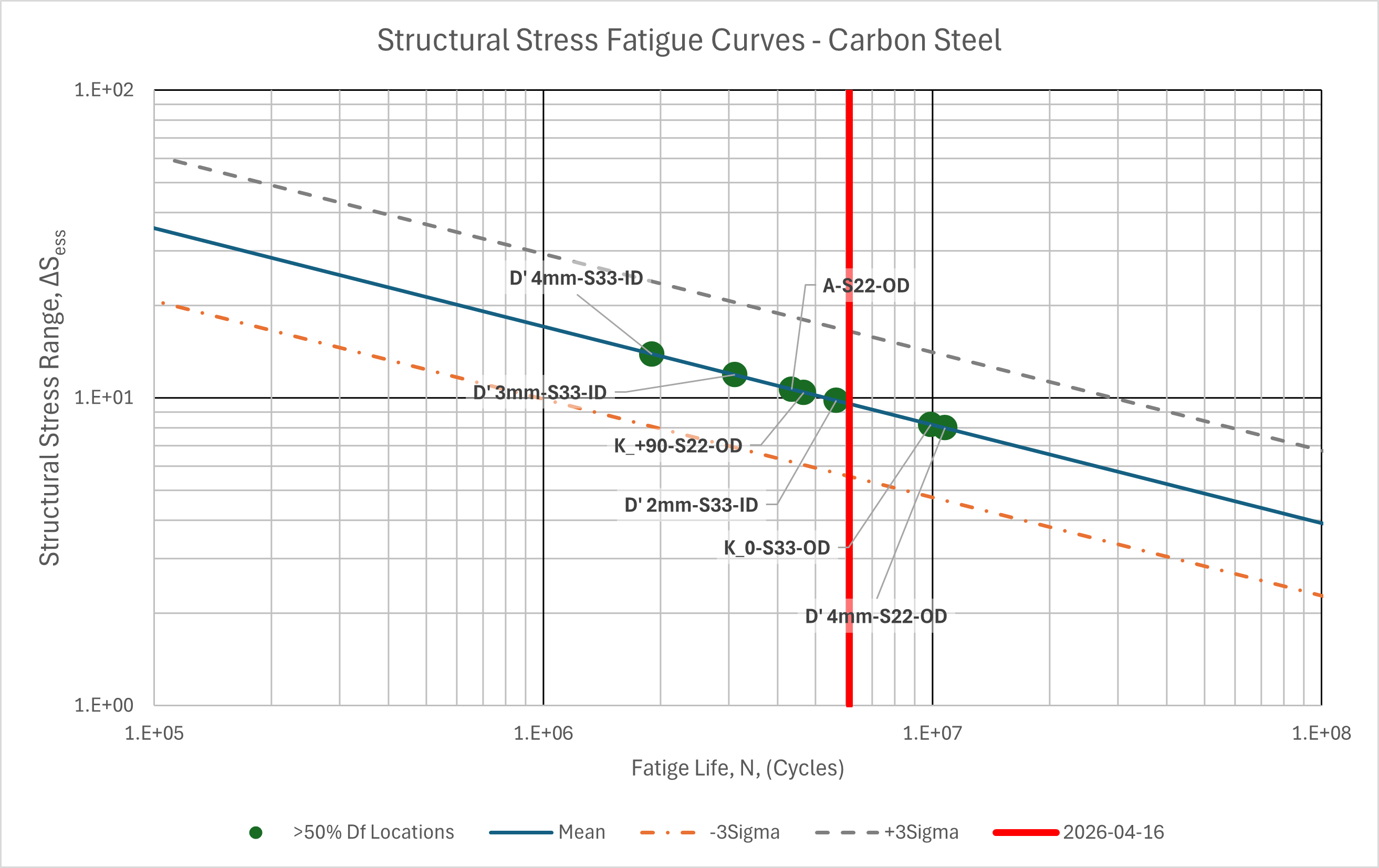
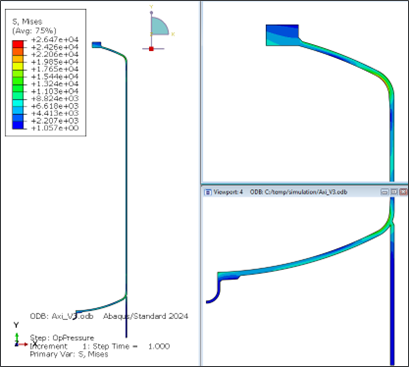
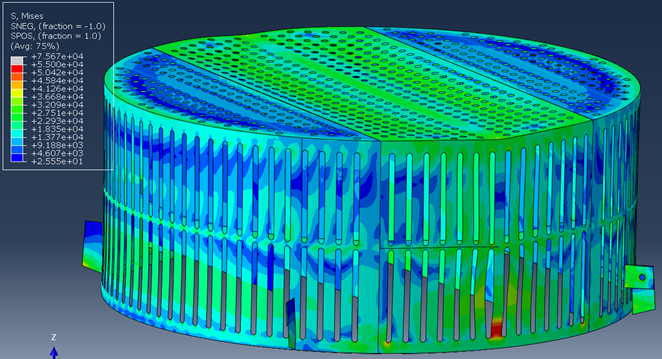
CANATUS performed a fatigue reassessment using ASME Section VIII Division 2 and API 579 methodologies supported by detailed finite element analysis (FEA). Both smooth bar and structural stress fatigue methods were applied to evaluate welded and non-welded fatigue-sensitive locations under cyclic pressure loading. The original design of the vessel didn't consider the structural stress method as it was designed prior to it being available in the Code.
The assessment identified the most fatigue-critical areas, including the top head access opening weld, head knuckle region, longitudinal seam peaking locations, and outlet nozzle reinforcement pad welds. Results were compared against both conservative design fatigue curves and mean-life predictions to support practical in-service interpretation.
The work also evaluated the effects of weld peaking, inspection accessibility constraints, and potential weld improvement options to support a transition from design-life assumptions toward inspection-based integrity management.
Value
- Identified fatigue-critical weld and nozzle locations
- Focused future inspection scope on highest-risk areas
- Evaluated weld improvement options for life extension
- Supported development of future damage-tolerant inspection strategy


Ready to talk about your asset integrity challenges?
Whether you are seeking emergency support or strategic solutions to chronic problems, we are prepared to help.

An engineering colleague you can rely on to solve your biggest challenges. A dedicated partner committed to educating and empowering your team for long-term success.