
Proactive Fitness-For-Service for Wall Loss
Problem
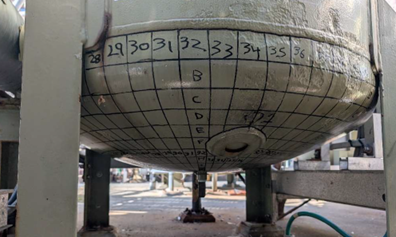
An owner-operator found external corrosion on a small vessel that was originally designed without a corrosion allowance. Before proceeding to perform additional inspections, they requested determining the minimum required thicknesses at multiple locations using both ASME Code and API-579 approaches to develop go/no-go criteria. As this was a relatively small vessel, extensive inspection or advanced fitness-for-service may not be cost effective versus replacement.
Solution
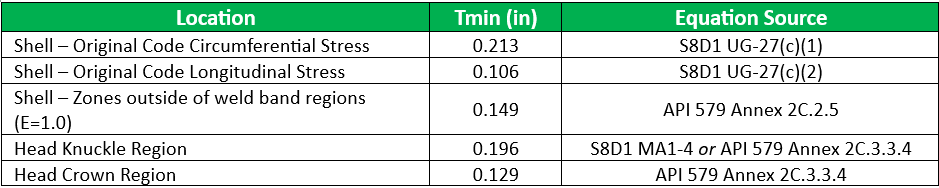
CANATUS applied ASME Section VIII and API 579 methodologies to establish region-specific minimum required thicknesses (tmins) and identify the locations most likely to govern future integrity before broad inspection activities were undertaken. The assessment differentiated between:
- weld band and non-weld band regions (considering joint efficiency)
- shell versus head requirements
- crown and knuckle head geometry
- nozzle reinforcement and exempt regions
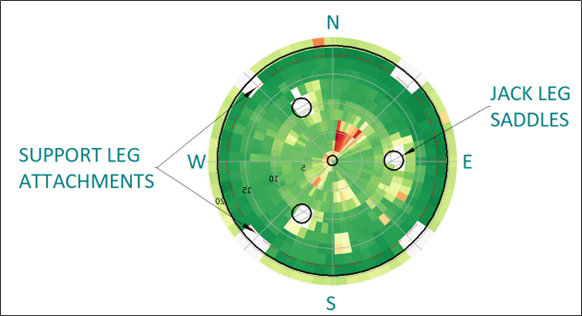
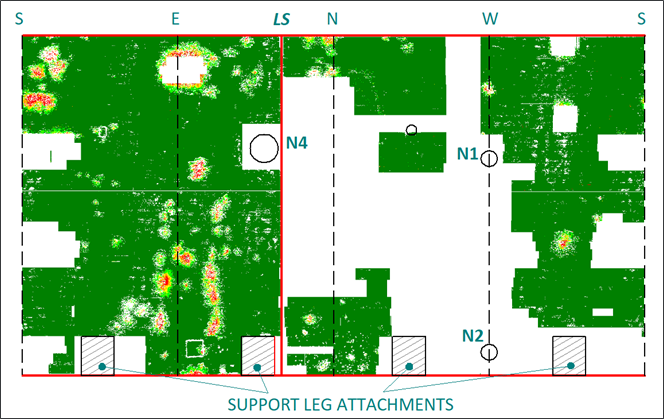
Existing inspection data was processed using custom visualization and statistical tools to validate assumptions, identify critical regions, and establish practical future corrosion allowances. Inspection guidance (location and extent) was provided.
Value
Provided a technically defensible basis for focused inspection planning and future integrity management rather than relying on broad, conservative inspection scope. Established practical thickness thresholds and identified which regions governed the mechanical integrity, allowing inspection resources to be prioritized where they provided the greatest value. Avoided unnecessary repairs and unnecessary advanced analysis while confirming the vessel remained fit for continued operation at original design conditions.


Ready to talk about your asset integrity challenges?
Whether you are seeking emergency support or strategic solutions to chronic problems, we are prepared to help.

An engineering colleague you can rely on to solve your biggest challenges. A dedicated partner committed to educating and empowering your team for long-term success.